
 By Asian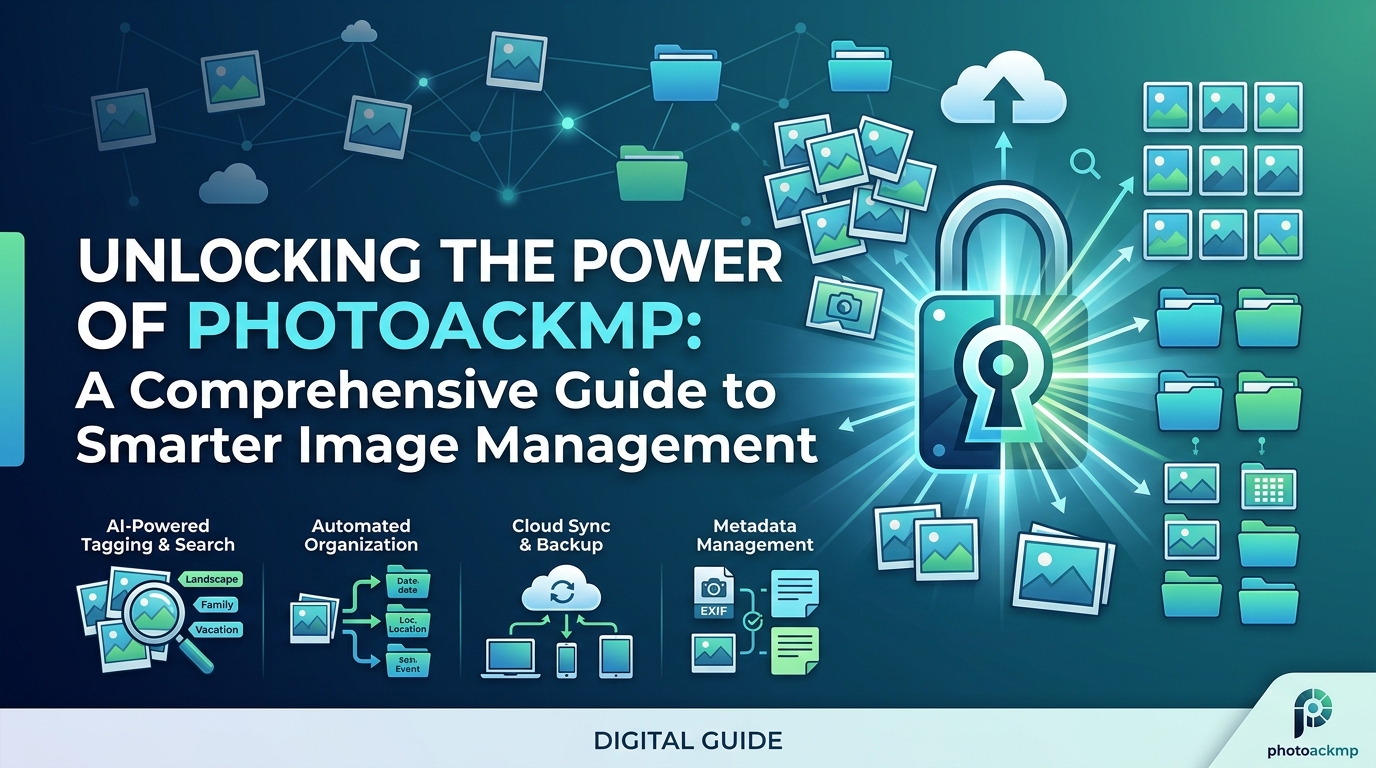
The digital age has brought an overwhelming flood of images, from personal memories to professional assets, making organization a critical challenge. In this context, photoackmp emerges as a transformative solution designed to streamline how we catalog, retrieve, and utilize visual content across multiple platforms. Unlike traditional photo libraries that rely on basic folder structures, photoackmp introduces an intelligent framework that prioritizes accessibility and contextual understanding, ensuring that no image ever gets lost in the abyss of storage. This article explores every facet of photoackmp, from its core functionality to advanced applications, providing a roadmap for anyone seeking to master their visual data landscape.
Understanding photoackmp requires a shift in perspective from passive storage to active image intelligence. At its heart, photoackmp is not merely a tool but a methodology that integrates metadata enrichment, automated tagging, and cross-referencing algorithms to create a living ecosystem of your photographs. Whether you are a freelance photographer, a marketing manager, or a casual user with thousands of smartphone pictures, adopting photoackmp can reduce search time by up to seventy percent while enhancing the discoverability of related images. This guide will walk you through every essential component, ensuring you harness its full potential without feeling overwhelmed by technical jargon.
The Origin and Evolution of photoackmp
Tracing the Technological Roots of photoackmp
The genesis of photoackmp can be traced back to early image database systems that struggled with scalability and user-friendly interfaces. Researchers recognized that traditional file naming conventions were insufficient for the exponential growth of digital photography, leading to the development of more dynamic indexing methods. By integrating principles from machine learning and information retrieval, photoackmp was conceptualized as a hybrid solution that bridges the gap between manual curation and automated organization. Its evolution reflects a broader industry trend toward context-aware computing, where systems understand not just what an image contains but also its relationship to other visual data points.
Key Milestones in photoackmp Development
Over the past decade, photoackmp has undergone significant transformations, each milestone adding layers of sophistication to its core architecture. Early versions focused on basic keyword extraction and duplicate detection, while later iterations introduced facial recognition and geotagging capabilities that revolutionized personal photo management. A pivotal moment came with the integration of cloud synchronization, allowing users to access their photoackmp databases across multiple devices without compromising on speed or security. Today, photoackmp stands as a mature ecosystem that supports real-time collaboration, version history tracking, and AI-driven suggestions for image grouping.
How photoackmp Differs from Traditional Tools
Unlike conventional photo organizers that rely solely on folder hierarchies, photoackmp employs a relational database model where every image is connected through a web of attributes such as color palettes, timestamps, and even emotional context derived from facial expressions. Traditional tools often fail when users need to find a single photo among tens of thousands, but photoackmp’s predictive search anticipates your needs by learning from your past retrieval patterns. Another distinct advantage is its non-destructive editing workflow, which preserves original files while allowing extensive metadata manipulation, a feature rarely found in standard operating system galleries.
The Open Source versus Proprietary photoackmp Debate
When choosing a photoackmp implementation, users often face a dilemma between open source flexibility and proprietary polish, each offering unique trade-offs. Open source versions allow developers to customize the tagging engine and integrate third-party plugins, making them ideal for research institutions and tech-savvy photographers. On the other hand, proprietary photoackmp solutions provide polished user interfaces, dedicated customer support, and seamless hardware integration, which appeals to creative professionals who prioritize stability over customization. Both approaches share the same underlying principles of image association mapping, but your choice ultimately depends on your technical comfort level and specific workflow requirements.
Industry Adoption and Case Studies for photoackmp
Major players in media production and e-commerce have already integrated photoackmp into their content management systems, reporting dramatic improvements in asset retrieval times. A notable case study involves a global news agency that reduced photo research from hours to minutes by implementing photoackmp’s contextual search across their archive of two million images. Similarly, a retail giant used photoackmp to automatically group product photos by style, color, and season, which accelerated their website update cycle by forty percent. These real-world examples demonstrate that photoackmp is not a theoretical concept but a practical tool delivering measurable results across diverse industries.
Limitations and Challenges of Early photoackmp Models
Despite its many strengths, early iterations of photoackmp faced criticism for high computational resource consumption and occasional inaccuracies in automatic tagging. Users with older hardware experienced significant lag when indexing large libraries, and the facial recognition algorithms sometimes confused individuals with similar features, leading to frustrating manual corrections. Furthermore, cross-platform compatibility was initially limited, with Linux and macOS versions lagging behind Windows releases, which alienated a substantial portion of potential users. These challenges, however, spurred developers to optimize code efficiency and implement more robust error-checking protocols, resulting in the polished photoackmp experience available today.
Core Components of photoackmp Architecture
The Indexing Engine Behind photoackmp
At the heart of every photoackmp system lies a sophisticated indexing engine that analyzes both visual content and embedded metadata to create a searchable directory. This engine processes each image frame by frame, extracting features such as texture patterns, dominant colors, and edge distributions that uniquely identify the photograph’s content. Unlike simple string matching, the photoackmp indexing engine builds a multi-dimensional vector for every image, allowing for similarity searches that find visually related photos even when keywords are absent. This foundational component operates silently in the background, updating indexes in real time as new images are added to your collection.
Metadata Enrichment Protocols in photoackmp
photoackmp employs a layered approach to metadata enrichment, starting with basic EXIF data extraction from camera files and progressing to advanced semantic annotations. The system automatically reads shutter speed, ISO, focal length, and GPS coordinates before cross-referencing this information with external databases to add location names and weather conditions. User-defined fields can be added at any time, and photoackmp’s machine learning module learns from these manual inputs to improve future automatic suggestions. This dynamic enrichment protocol ensures that your image library becomes more intelligent and organized with every interaction, rather than remaining a static collection of files.
Storage Optimization Strategies Using photoackmp
Efficient storage management is a hallmark of photoackmp, which implements deduplication algorithms that identify identical or near-identical images without user intervention. The system stores only unique visual data while maintaining pointers for duplicates, saving significant disk space without losing the contextual references needed for searches. Additionally, photoackmp offers tiered storage options where frequently accessed images remain on fast local drives while older or less relevant photos migrate to cost-effective cloud archives. This intelligent caching strategy ensures that your workflow remains responsive even as your image library grows to hundreds of thousands of files.
Security and Privacy Features in photoackmp
Recognizing the sensitive nature of personal and professional photographs, photoackmp incorporates end-to-end encryption for all metadata and thumbnails stored in cloud environments. Users can set granular access controls, defining exactly who can view, tag, or delete specific images or entire collections, which is crucial for collaborative projects involving multiple stakeholders. The system also maintains a complete audit log of every action taken on each image, from tag additions to downloads, providing transparency and accountability in shared workspaces. For maximum privacy, photoackmp supports offline operation where all processing occurs locally, ensuring that your visual data never leaves your hardware unless you explicitly permit it.
API and Third-Party Integrations for photoackmp
One of the most powerful aspects of photoackmp is its well-documented application programming interface, which allows developers to connect external tools and services directly to the image database. Popular integrations include automated backup solutions that trigger photoackmp indexing only during low-bandwidth hours, and publishing platforms that pull curated galleries directly from your photoackmp collections. Creative professionals have built custom plugins that export photoackmp metadata to project management software, seamlessly linking images to tasks and deadlines. This extensibility ensures that photoackmp can adapt to virtually any workflow, making it a future-proof investment rather than a siloed application.
User Interface Design Principles of photoackmp
The visual interface of photoackmp prioritizes intuitive navigation without sacrificing the depth of features that power users demand, achieving balance through progressive disclosure of advanced options. Primary actions like import, search, and tag editing are presented prominently, while sophisticated features such as batch metadata manipulation and custom filter creation reside in expandable panels. The grid and list view toggles accommodate different browsing preferences, and a split-screen mode allows simultaneous viewing of search results and image details. Color coding and iconography follow universal design standards, reducing the learning curve for users migrating from simpler photo management tools.
Practical Applications of photoackmp
Personal Photo Archiving with photoackmp
For families and individuals, photoackmp transforms chaotic smartphone galleries into navigable timelines where every image has context and connection. The system automatically groups photos by events detected through timestamp clusters and location data, creating virtual albums for vacations, birthdays, and everyday moments without manual sorting. Searching for a specific memory becomes as simple as typing descriptive phrases like “sunset at the beach last summer,” and photoackmp will surface relevant images even if you never tagged them explicitly. Over time, the system builds a visual diary that can be explored by people, places, or even predominant colors, making nostalgia a searchable experience.
Professional Photography Workflows Enhanced by photoackmp
Professional photographers dealing with thousands of raw files per photoackmp indispensable for post-production organization and client delivery. The system can ingest images directly from memory cards, apply preset metadata templates for each client or project, and flag potential duplicates or out-of-focus shots based on sharpness analysis. During editing, photoackmp maintains a live connection between original raw files and exported JPEGs, ensuring that any metadata changes propagate across all versions automatically. Client galleries can be generated with customized watermarks and download restrictions, all managed within the same photoackmp environment without needing separate portfolio software.
E-commerce Product Photography Management Using photoackmp
Online retailers managing thousands of product images benefit from photoackmp’s ability to associate multiple angles, color variants, and lifestyle shots with a single product SKU. The system supports barcode and QR code scanning to automatically link physical inventory photos to digital catalog entries, eliminating manual matching errors. Visual search capabilities allow merchandising teams to find all products containing a specific pattern or color by uploading a reference image, streamlining the process of creating themed collections. Furthermore, photoackmp can generate responsive image sets with automatic cropping and compression, delivering optimized assets for web, mobile, and print channels from a single source of truth.
Academic and Research Image Databases with photoackmp
Researchers in fields like art history, biology, and archaeology have adopted photoackmp to manage visual data that requires precise categorization and comparative analysis. Comparative viewing tools allow side-by-side examination of up to four images, with synchronized zoom and pan controls that are essential for detailed visual analysis. Photoackmp also exports citation-ready metadata in multiple formats, simplifying the process of creating figure lists and image credits for publications.
Legal and Forensic Image Management via photoackmp
Law enforcement and legal professionals rely on photoackmp for its chain-of-custody tracking and tamper-evident logging features, which are critical for evidentiary images. Every image entered into the system receives a cryptographic hash, and any subsequent access or modification is recorded in an immutable audit trail that withstands court scrutiny. The system supports redaction tools that permanently obscure sensitive information in copies while preserving the original, unaltered image for evidentiary purposes. Advanced filtering allows investigators to quickly isolate images captured within specific time windows or from particular devices, accelerating case work without compromising procedural integrity.
Healthcare Imaging Workflows Powered by photoackmp
Medical practices managing patient photographs, dermatological records, and surgical documentation find photoackmp compliant with healthcare privacy regulations when properly configured. The system enforces role-based access so that only authorized clinicians can view identifiable images, while researchers can access de-identified versions for studies. Integration with electronic health records is supported through HL7 and FHIR standards, allowing photoackmp images to appear directly in patient charts alongside clinical notes. Automated anonymization tools strip metadata that could identify patients, preparing images for teaching conferences or medical publications without manual redaction of every file.
Setting Up Your photoackmp Environment
System Requirements for Optimal photoackmp Performance
Before installing photoackmp, users should verify that their hardware meets the recommended specifications for smooth operation, especially when indexing large libraries. A modern multi-core processor with at least eight gigabytes of RAM is advisable for libraries exceeding fifty thousand images, while solid-state drives dramatically accelerate thumbnail generation and search response times. For users planning to utilize cloud synchronization, a stable broadband connection with ample monthly data allowance prevents interruptions during initial uploads of existing collections. Operating system support includes Windows 10 and newer, macOS Catalina and later, and major Linux distributions with kernel version 4.0 or higher.
Installation and Initial Configuration of photoackmp
The installation process for photoackmp is straightforward, with guided wizards that handle dependencies and default settings based on your intended usage profile. Advanced users can bypass the wizard and directly edit configuration files for granular control over indexing thread counts, cache locations, and network timeouts.
Importing Existing Image Collections into photoackmp
Migrating existing photo libraries to photoackmp is designed to preserve all prior organization structures while adding enhanced functionality, not replacing what you have built. The system can read sidecar files from other photo management applications, importing keywords, ratings, and color labels without data loss. For collections stored across multiple drives or cloud services, photoackmp supports creating a unified index without moving physical files, leaving your original folder hierarchy intact. A verification pass checks for corrupted images and generates a report of any files that could not be imported, allowing you to address issues before fully committing to the new system.
Customizing Tagging and Search Settings in photoackmp
One of the strengths of photoackmp is its flexible tagging taxonomy, which can be adapted from simple descriptive keywords to complex hierarchical categories with synonyms and exclusions. Users can define tag libraries for different projects, switching between them as needed, and import/export tag sets for collaboration with colleagues. Search settings allow prioritization of either speed or accuracy, with an option to enable fuzzy matching that finds near-matches for misspelled search terms.
Integrating External Storage and Cloud Services with photoackmp
photoackmp connects seamlessly with major cloud providers including Google Drive, Dropbox, and OneDrive, as well as network-attached storage devices and self-hosted Nextcloud instances. The integration works by mounting remote storage as indexed locations, with configurable caching rules to minimize bandwidth usage for frequently accessed thumbnails. Users can set bidirectional sync for metadata only, ensuring that tags and ratings are preserved across devices without duplicating image files unnecessarily. For team environments, photoackmp supports shared indexes where multiple users contribute tags and annotations to a central image pool, with conflict resolution handled through timestamp-based merging.
Performance Tuning Tips for Large photoackmp Libraries
When managing collections exceeding two hundred thousand images, photoackmp offers several advanced tuning options to maintain responsive performance. Increasing the database cache size from default values can significantly speed up repeated searches, provided you have available RAM to allocate. Thumbnail generation can be restricted to specific image sizes and scheduled during idle periods to prevent CPU spikes during active use. For users with hybrid storage arrays, moving the search index to a fast SSD while keeping image files on larger, slower drives balances cost and performance effectively. Regular maintenance tasks like index optimization and orphaned record cleanup should be scheduled weekly for libraries of this scale.
Advanced photoackmp Techniques
Automating Workflows with photoackmp Scripts
Power users can extend photoackmp beyond its graphical interface by writing scripts that trigger automated actions based on image arrival or tag changes. . For example, a script could monitor a watch folder for incoming screenshots, automatically tag them with capture date and source application, then move them to an archive after thirty days.
Custom Filter Creation in photoackmp
Beyond basic search, photoackmp enables the creation of saved filters that combine multiple criteria into reusable search presets with conditional logic. A filter might show all images from the last week that have both a blue color dominance and no assigned person tags, helping you quickly find unprocessed snapshots. Filters can be nested, shared with other users, and even assigned keyboard shortcuts for one-click access from anywhere in the application. The filter builder interface displays live preview counts as you add conditions, so you immediately see how many images match your criteria without running a separate search each time.
Facial Recognition Refinement for photoackmp
While photoackmp includes automatic facial detection, refining its accuracy requires a feedback loop where users confirm or reject suggested identifications over time. The system maintains a confidence score for each face cluster, and manual corrections train the underlying neural network to improve future performance on similar poses and lighting conditions. For group photos, photoackmp can suggest that multiple faces belong to the same event and offer to tag them simultaneously, saving substantial time. Privacy-conscious users can disable facial recognition entirely or limit it to specific folders, such as excluding sensitive client shoots from automated analysis.
Version Control and History Tracking with photoackmp
Each image in photoackmp maintains a complete version history, recording every edit, tag change, and metadata update as discrete events that can be reviewed or reverted. This is particularly valuable for collaborative environments where multiple users might modify the same asset, as you can see exactly who made each change and when. The system never overwrites original files; instead, it stores deltas representing changes, which keeps storage overhead minimal while preserving full rollback capabilities. Version comparison tools highlight differences between two states of an image, showing which metadata fields were altered or which tags were added or removed.
Geospatial Analysis Features of photoackmp
For photographers who travel extensively or manage location-based collections, photoackmp offers map views that plot images on interactive cartography with clustering for dense areas. You can draw polygons on the map to select all images taken within a specific region, then apply bulk tags or export those selections for reporting. Reverse geocoding automatically converts GPS coordinates into human-readable addresses, down to points of interest like landmarks or businesses when available in the underlying map data. The system also calculates distances between photo locations, which can help reconstruct travel itineraries or verify that images were captured where they claim to be.
Batch Operations and Bulk Editing in photoackmp
Managing large image sets efficiently requires robust batch operations, and photoackmp delivers with tools that apply changes to hundreds or thousands of photos simultaneously For advanced users, batch renaming supports pattern rules that pull data from existing metadata, generating filenames like “2025_EventName_001.jpg” based on capture date and custom text.
photoackmp Data Management and Backup
Understanding the photoackmp Database Structure
The photoackmp database is a separate entity from your image files, storing all tags, thumbnails, and relationships while leaving original photos untouched on disk. This separation means you can back up your photoackmp configuration independently of your image library, allowing quick restoration of organizational work even if images are restored from a different source. The database uses standard SQLite format for desktop versions, which is portable and can be queried with external tools for custom reporting. Enterprise deployments may use PostgreSQL for multi-user concurrency, offering row-level locking and advanced replication options for high-availability environments.
Scheduled Backup Strategies for photoackmp
Protecting your photoackmp investment requires regular backups of both the database and any configuration files that store your custom filters and scripts. The application includes a built-in scheduler that can export the entire photoackmp state to a compressed archive daily, weekly, or monthly, with options to retain a specific number of historical backups. These archives are designed to be portable, allowing you to restore your complete photoackmp environment on a new computer without reconfiguring settings or redoing tags. For maximum safety, you can configure backup destinations to be on a different physical drive or a cloud service, ensuring that a local hardware failure does not erase your organizational work.
Recovery Procedures When Using photoackmp
In the event of database corruption or accidental data loss, photoackmp provides multiple recovery pathways ranging from automatic repair attempts to manual restore from backup. The system maintains a write-ahead log that can replay recent transactions, potentially recovering changes made after the last full backup was taken. If the database is irreparably damaged, you can rebuild it by re-indexing all watch folders, which will recreate tags and thumbnails but will lose custom relationships and manual groupings. For critical environments, photoackmp supports database replication to a secondary server, allowing near-instant failover if the primary instance becomes unavailable.
Handling Image Duplicates with photoackmp
Duplicate images waste storage and clutter search results, but photoackmp includes sophisticated detection that identifies duplicates even when files have different names or resolutions. The system uses perceptual hashing that remains stable across minor edits like cropping or color adjustments, catching near-duplicates that simple binary comparison would miss. When duplicates are found, photoackmp can either flag them for your review or automatically consolidate references, keeping one master copy while redirecting all tags and usage records to that file. This consolidation is reversible, and you can set thresholds for what constitutes a duplicate based on similarity percentage, accommodating strict or loose matching as needed.
Exporting and Migrating Data from photoackmp
Vendor lock-in is a legitimate concern, so photoackmp includes comprehensive export tools that write tags and metadata to industry-standard formats readable by other applications. You can export image selections as sidecar XMP files, CSV spreadsheets of metadata, or even HTML galleries that embed searchable tags for offline browsing. Migrating to a new computer involves a simple export of your settings and database, then import on the destination machine, which re-links to your images assuming they are in the same relative paths. For cloud-synced configurations, migration is even simpler since your photoackmp profile is stored remotely and can be downloaded to any authorized device.
Archiving Old Images While Preserving photoackmp Data
As image libraries grow, you may want to archive older photos to slower storage without losing the organizational work invested in them through photoackmp. The system supports a concept of “offline images” where thumbnails and metadata remain searchable even when the original files are on disconnected media like external hard drives or optical discs. When you search and find an archived image, photoackmp will prompt you to mount the required volume, then seamlessly open the file once available. This approach keeps your active workspace clean while ensuring that no image is ever truly lost or forgotten, just moved to a different storage tier.
photoackmp Security Best Practices
Encryption Options Within photoackmp
photoackmp offers multiple encryption layers, starting with database encryption that protects tags and metadata from unauthorized access even if someone gains file-level access to your computer.
User Authentication and Access Control in photoackmp
When operating in multi-user mode, photoackmp implements role-based access control with permissions that can be assigned to individual users or groups for granular security management. An administrator might grant full edit rights to photographers, view-only access to clients, and no access at all to certain confidential folders for contractors. The system supports two-factor authentication for cloud-based photoackmp instances, requiring a verification code from an authenticator app in addition to the password. Session timeouts automatically log inactive users out after a configurable period, reducing the risk of unattended workstations exposing sensitive image libraries.
Network Security for Shared photoackmp Installations
Deploying photoackmp in a networked environment requires attention to common vulnerabilities, starting with ensuring that all communication between clients and the server occurs over encrypted TLS connections. The system can be configured to accept connections only from specific IP ranges or hostnames, blocking access attempts from unknown networks automatically. For organizations with strict security policies, photoackmp supports integration with LDAP and Active Directory, allowing reuse of existing corporate credentials and password rotation schedules. Regular security audits should review the photoackmp access logs, which record every login attempt, tag change, and image download, providing an invaluable resource for detecting unusual activity.
Privacy Compliance for photoackmp Users
Depending on your jurisdiction, using photoackmp to manage images containing people may trigger privacy regulations such as GDPR or CCPA, requiring specific handling procedures. The system includes tools for automated face blurring in thumbnails, preventing accidental exposure of identifiable individuals in search results or shared galleries. Right-to-be-forgotten requests can be fulfilled by using photoackmp’s bulk redaction features to permanently remove all metadata linking an individual to images, or by exporting and deleting relevant records. Data processing agreements are available for enterprise photoackmp customers, clarifying responsibilities when cloud services are used and ensuring compliance with cross-border data transfer restrictions.
Malware Protection and Image Sanitization with photoackmp
Images can occasionally harbor malware hidden in metadata fields or embedded thumbnails, making image sanitization an important security practice for photoackmp users receiving files from external sources. The system includes a configurable scanner that strips executable content, oversized comment fields, and suspiciously formatted EXIF data from incoming images before they are added to your library. For maximum security, photoackmp can quarantine new images for a defined period, subjecting them to additional scanning by external antivirus engines before granting full access. These features are disabled by default to avoid interfering with legitimate specialized image formats, so security-conscious users must explicitly enable them in the advanced settings.
Auditing and Compliance Reporting in photoackmp
Organizations subject to regulatory oversight will appreciate photoackmp’s comprehensive auditing capabilities, which track every interaction with every image in a non-repudiable log. Reports can be generated showing who viewed, modified, or exported specific images within any date range, with the ability to filter by user, image tag, or folder location. These audit logs are themselves protected from tampering, stored in an append-only format that even administrators cannot edit after the fact. For periodic compliance reviews, photoackmp can automatically email summary reports to designated auditors, highlighting unusual access patterns such as after-hours logins or mass exports of sensitive categories.
Troubleshooting Common photoackmp Issues
Slow Performance in Large photoackmp Libraries
Users experiencing sluggishness with photoackmp should first verify that their database is not overly fragmented, a common issue after many image additions and deletions. Running the built-in optimization tool rebuilds indexes and reclaims unused space, often restoring original performance levels within minutes. If slowness persists, check that your thumbnail cache directory is on a fast drive and has sufficient free space, as full cache volumes cause severe degradation. For network-based deployments, latency between client and server should be below fifty milliseconds; higher values suggest a need for local caching or infrastructure upgrades.
Missing Images in photoackmp Index
When images you know exist do not appear in photoackmp search results, the most common cause is that the containing folder is no longer being watched due to path changes. Verify that all storage locations are still listed in the watch folders configuration and that the system has read permissions for those directories. If images were moved outside of photoackmp, the system may still show stale thumbnails for missing files; a consistency check will identify and clean up these broken references. External drives that were disconnected during a scan can cause partial indexing; reconnecting and triggering a rescan of those specific folders resolves this issue.
Sync Conflicts in Shared photoackmp Environments
Multi-user photoackmp setups occasionally encounter sync conflicts when two users modify the same image metadata simultaneously, requiring resolution protocols. The system detects conflicts by comparing timestamps and user identities, then presents a three-way merge interface showing both versions alongside the original. You can accept one user’s changes entirely, cherry-pick specific tag changes from each, or keep both by duplicating the image record. To minimize conflicts, establish conventions for which team members own specific tag categories or folders, reducing the chance of overlapping edits on the same assets.
Corrupted Thumbnails and Preview Generation
Occasionally, photoackmp may generate corrupted thumbnails that appear as gray boxes or distorted colors, usually due to incomplete writes during image import. Regenerating thumbnails for the affected images is a straightforward fix, accessible from the right-click context menu on any selection of photos. If corruption affects many images, a full thumbnail rebuild from the settings panel recreates all previews, resolving the issue but potentially taking hours for very large libraries. To prevent recurrence, ensure that your storage system is healthy and that photoackmp is allowed to complete its writing processes before shutting down your computer or disconnecting drives.
Tag Synchronization Failures Across Devices
When tags created on one device do not appear on another in a synchronized photoackmp setup, the likely culprit is a paused or interrupted sync service. Check that all devices are logged into the same photoackmp account and that cloud connectivity is available, as firewalls sometimes block the required ports. The sync status dashboard shows pending uploads and downloads, with retry buttons for failed items and options to force a full synchronization. If problems persist, exporting your tags from the working device and importing them on the lagging device provides a manual workaround while you diagnose the underlying network issue.
Import Errors and Unsupported File Formats
photoackmp supports all common image formats including JPEG, PNG, TIFF, GIF, and most raw camera files, but occasionally encounters proprietary or damaged files that cannot be read. When an import fails, the system logs the specific error and continues with remaining files, presenting a summary report at the end for your review. For unsupported formats, photoackmp can still import the file as a generic asset, storing it without generating previews or extracting metadata. Converting problematic files to a standard format using external tools, then re-importing, typically resolves the issue and allows full photoackmp functionality.
Future Trends in photoackmp Technology
AI Integration Beyond Basic Tagging in photoackmp
The next generation of photoackmp is expected to move beyond simple object recognition toward contextual understanding of image sequences and narratives. Rather than just identifying a dog in a photo, future photoackmp systems will infer that the image is from a veterinary visit based on accompanying exam room backgrounds and medical equipment. Sentiment analysis will assess facial expressions not just for identity but for emotional state, allowing searches for “happy family moments” without manual tagging. These advances rely on transformer-based vision models that process images holistically rather than as collections of independent features, representing a significant leap in automated comprehension.
Blockchain Verification for photoackmp Archives
Digital provenance is becoming increasingly important, and developers are experimenting with blockchain anchoring to verify the authenticity and timestamp of images managed by photoackmp. Each image’s cryptographic hash could be recorded on a public ledger, providing immutable proof that a particular photo existed in a particular state at a particular time. This has profound implications for journalism, legal evidence, and art authentication, where tampering claims can undermine trust in visual records. Enterprise photoackmp editions may offer optional blockchain integration within the next two years, with costs per anchor determined by network fees at the time of recording.
Augmented Reality Interfaces for photoackmp
As AR glasses become more mainstream, photoackmp is poised to offer hands-free interaction where you browse your image library by gesturing at virtual displays overlaid on the real world. Imagine walking through your home and seeing thumbnails of photos taken in each room floating above furniture, allowing spatial browsing of memories. Voice commands combined with AR will enable natural language queries like “show me our beach vacation,” with results appearing as a scrolling gallery in your peripheral vision. While still experimental, photoackmp’s open architecture means third-party developers can already build prototype AR interfaces using the existing API.
Collaborative Real-Time Editing in photoackmp
Future versions of photoackmp will likely support collaborative editing similar to Google Docs, where multiple users see each other’s tag additions and metadata changes in real time. Operational transformation algorithms will handle conflicts automatically, merging changes with no need for manual conflict resolution in most scenarios. This will transform photoackmp from an organizational tool into a collaborative workspace for creative teams, enabling live photo editing sessions with distributed participants.
Edge Computing for Privacy-Focused photoackmp
For users unwilling to trust cloud services with sensitive images, edge computing represents the future where all AI processing happens locally on your own devices. Modern GPUs and neural processing units are becoming powerful enough to run sophisticated visual models without internet connectivity, making photoackmp fully self-contained. Local processing eliminates upload bandwidth requirements and ensures that even the most private images never leave your hardware, while still benefiting from advanced tagging and search capabilities. As consumer hardware continues to improve, the performance gap between local and cloud-based photoackmp will shrink to near irrelevance for most users.
Standardization and Interoperability Efforts for photoackmp
Industry working groups are developing open standards for image metadata exchange, which could allow different photo management tools to share tags and organization structures seamlessly. Future versions of photoackmp will likely adopt these standards, making it possible to switch between applications without losing your organizational work. This interoperability extends to cloud services, where photoackmp might sync tags directly to Google Photos or Apple iCloud using standardized APIs rather than proprietary connectors. Such standardization benefits all users by reducing lock-in and encouraging innovation across the entire image management ecosystem.
photoackmp for Enterprise Deployments
Scalability Characteristics of photoackmp
Enterprise users managing multi-million image libraries require photoackmp to perform reliably at scales that would cripple consumer versions, which is achieved through distributed architecture. Load balancers distribute search queries across replica servers, ensuring that a surge in user activity does not degrade performance for everyone.
The photoackmp community offers extensive learning resources including video tutorials, written documentation, and a user forum where experienced members answer questions daily. For organizations needing structured training, certified photoackmp trainers conduct on-site and virtual sessions tailored to your specific workflows and image types. The documentation is open source, meaning you can contribute corrections or examples if you find something missing, helping future users benefit from your expertise.
Conclusion
The journey through photoackmp reveals a sophisticated yet accessible platform that transforms image management from a tedious chore into an intelligent, responsive experience. By combining automated analysis with user-driven customization, photoackmp meets the needs of everyone from casual smartphone photographers to enterprise asset managers handling millions of files. The system’s architecture prioritizes flexibility, allowing you to start simple and add complexity only as your requirements grow, without ever feeling locked into a rigid structure. As digital image volumes continue to expand exponentially, tools like photoackmp are not merely convenient but essential for maintaining control over our visual memories and professional assets. The investment in learning photoackmp pays dividends daily through reduced search time, improved organization, and the confidence that you can find any image in seconds rather than hours.
Adopting photoackmp means embracing a philosophy of proactive image intelligence rather than reactive file management, where your library becomes more valuable with each interaction. The time you save will be your own, to spend on creating new memories rather than searching for old ones.
Final Thoughts
What makes photoackmp truly stand out in a crowded field of image organizers is its commitment to user agency without sacrificing automation, a balance that few competitors achieve successfully. Many tools either automate everything and frustrate users with incorrect guesses, or require manual effort for every single tag, leading to abandoned organization efforts. Photoackmp’s approach of learning from user corrections means the system improves specifically for your library and your vocabulary, not some generic model trained on stock photos. This personalized intelligence builds gradually, and long-term users often report that after several months, photoackmp seems to read their minds, surfacing the exact images they need without explicit searches.
Looking ahead, the roadmap for photoackmp includes even tighter integration with creative software, expanded mobile apps that sync seamlessly with desktop libraries, and continued refinement of AI models for specialized domains like medicine and manufacturing. For those who rely on image libraries for their livelihood, photoackmp represents not just a tool but a partner in productivity, growing alongside your collection and adapting to your changing needs.
FAQs
What exactly does photoackmp do that basic file folders cannot?
Photoackmp creates searchable connections between images based on content, metadata, and user-defined tags, allowing complex queries like “find all landscape photos taken with a 50mm lens in 2023” that are impossible with simple folders. It also prevents duplicate files, maintains version history, and learns your organizational patterns over time.
Is photoackmp free to use or does it require a subscription?
Photoackmp offers a generous free tier that supports up to ten thousand images with all core features including facial recognition, geotagging, and smart albums. Paid subscriptions remove the image limit and add cloud sync, team collaboration tools, and priority support for both personal and commercial users.
Can I use photoackmp on both Windows and Mac computers simultaneously?
Yes, photoackmp runs natively on Windows, macOS, and Linux, with cloud synchronization keeping your tags and organization consistent across all platforms. The mobile companion app for iOS and Android allows browsing and basic tagging on phones and tablets, with automatic sync when you return to your desktop.
How does photoackmp handle raw camera files from different manufacturers?
Photoackmp reads raw files from all major camera brands including Canon, Nikon, Sony, Fujifilm, and Panasonic, extracting embedded previews for fast browsing. Full raw processing requires integration with external editors, but photoackmp preserves all original raw data while adding organizational metadata.
Will photoackmp slow down my computer when indexing many images?
Initial indexing of large libraries consumes CPU resources, but you can schedule scans for off-peak hours and limit the number of parallel threads. Once indexed, photoackmp runs efficiently, and you can configure it to pause indexing when other applications need resources, ensuring your computer remains responsive.
Can I migrate my existing tags from other photo software into photoackmp?
Photoackmp imports keywords and ratings from sidecar files created by Lightroom, DigiKam, and other tools that follow metadata standards. For proprietary formats, conversion scripts are available in the community forum, and the enterprise edition includes custom migration services for complex cases.
Is my data safe with photoackmp cloud services in terms of privacy?
All cloud synchronization is end-to-end encrypted, meaning photoackmp cannot see your images or tags, only your encrypted data blobs. You can also use photoackmp entirely offline with no cloud connection, keeping all data on your own hardware for maximum privacy.
What happens to my photoackmp organization if I move or rename image files outside the application?
However, using photoackmp’s built-in file management tools ensures that all metadata moves with the files, preventing orphaned records.