
 By Asian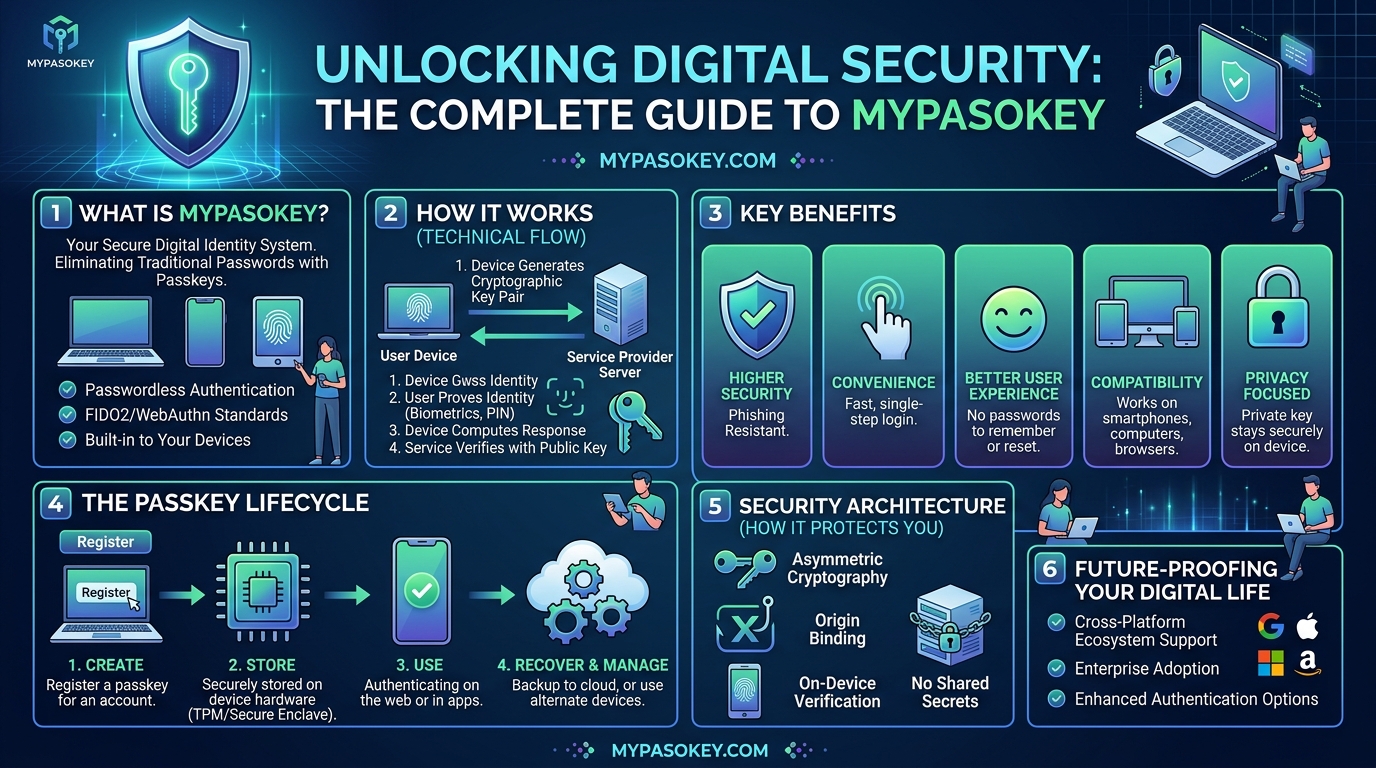
In an era where digital identities face constant threats, the need for a robust and user friendly authentication tool has never been greater. Enter mypasokey, a revolutionary approach to managing access credentials that prioritizes both security and simplicity. Unlike traditional password managers that often confuse users with complex interfaces, mypasokey offers a streamlined solution for individuals and businesses alike. This article will explore every facet of mypasokey, from its basic setup to advanced security protocols, ensuring you understand why it stands out in the crowded field of identity management. By the end of this guide, you will have a complete roadmap to integrating mypasokey into your daily digital routine.
Understanding the Core Architecture of mypasokey
The Fundamental Design Principles Behind mypasokey
How Zero Knowledge Encryption Shapes mypasokey Security
The Role of Biometric Integration in mypasokey Access
Mypasokey operates on a zero knowledge encryption model, meaning that even the service providers cannot see your stored passwords or keys. This design ensures that your sensitive data remains exclusively under your control, with no backdoor access for third parties. When you create an account with mypasokey, your master password generates a unique decryption key locally on your device, which never travels across the network. This architecture effectively eliminates the risk of server side breaches exposing your credentials, making mypasokey a trusted choice for security conscious users.
Biometric integration within mypasokey adds another layer of convenience without compromising safety. Users can link fingerprint scanners or facial recognition systems to their mypasokey vault, allowing for rapid authentication on supported devices. This feature reduces the friction of typing long master passwords while maintaining high security standards. Mypasokey uses device specific biometric data that never leaves your hardware, aligning with modern best practices for privacy. As a result, accessing your digital kingdom becomes as simple as a glance or a touch, yet remains unbreakable to remote attackers.
Comparing mypasokey to Traditional Password Managers
Why Mypasokey Eliminates Password Reuse Risks
The Offline Capability Advantage of Mypasokey
Traditional password managers often encourage password reuse by suggesting weak variations of existing credentials, but mypasokey takes a different approach. Its built in generator creates cryptographically strong, unique passcodes for every service you register, ensuring that a breach on one platform does not cascade into others. Mypasokey also monitors the dark web for compromised credentials associated with your email addresses, alerting you instantly if action is required. This proactive stance transforms password management from a reactive chore into a defensive strategy against identity theft.
Many password managers fail when internet connectivity drops, leaving users locked out of critical accounts. Mypasokey solves this with full offline functionality, storing an encrypted local copy of your vault that synchronizes when you reconnect. This means you can access your banking or work portals even during network outages or while traveling abroad without data access. The synchronization algorithm used by mypasokey is conflict free and fast, merging changes made on multiple devices without duplication errors. Such reliability makes mypasokey indispensable for professionals who cannot afford downtime.
Setting Up Your Mypasokey Account Step by Step
Initial Registration and Master Password Creation
Choosing a Master Password That Works With Mypasokey
Email Verification and Recovery Options in Mypasokey
When you first visit the mypasokey website or download its mobile application, you will be prompted to create a master password. This password is the single key to your entire mypasokey vault, so it must be both memorable and complex. Mypasokey provides a strength meter that evaluates entropy, suggesting a minimum of four random words combined with numbers and symbols. You should avoid personal information like birthdays or pet names, as these are easily guessed. Instead, let mypasokey suggest a passphrase that you can remember through a mental image or a short story.
After setting your master password, mypasokey asks for a verified email address to handle account recovery and security notifications. You will receive a confirmation link that must be clicked within fifteen minutes to activate your mypasokey profile. During this step, mypasokey also offers to generate a set of one time recovery codes that you should print or store offline. These codes serve as a backup if you forget your master password, bypassing the need for email based resets that could be intercepted. Mypasokey recommends keeping these codes in a safe deposit box or a locked drawer, never in digital form on your computer.
Importing Existing Credentials Into Mypasokey
Using CSV Imports for Smooth Mypasokey Migration
The Browser Extension Method for Mypasokey Data Capture
Moving from another password manager or from browser saved passwords to mypasokey is simple through its CSV import feature. You can export your existing credentials as a comma separated values file from your current tool, then upload that file into mypasokey’s secure import portal. Mypasokey will parse the file, detect duplicate entries, and prompt you to review before finalizing the import. During this process, mypasokey also runs a security scan to identify any passwords that are weak or have been reused across multiple sites. This gives you a clear roadmap for improving your digital hygiene immediately.
For users who have never used a password manager, mypasokey offers a browser extension for Chrome, Firefox, and Edge that captures credentials as you log in. When you visit a website and type your username and password, mypasokey asks if you want to save these details to your vault. The extension also fills credentials automatically on future visits, saving you time and reducing typos. Mypasokey’s extension can detect fake login pages designed by phishers, refusing to autofill on suspicious URLs. This protective layer turns your everyday browsing into a secure session without extra effort.
Core Features That Define Mypasokey
Password Generation and Strength Analysis
Customizing Length and Character Sets in Mypasokey
How Mypasokey Scores Existing Passwords
The password generator inside mypasokey is fully customizable, allowing you to set lengths from 12 to 64 characters and include or exclude symbols, numbers, uppercase, and lowercase letters. Some websites have archaic restrictions that forbid certain special characters, and mypasokey accommodates this with an advanced mode where you can manually define allowed symbols. You can generate multiple passwords in one session and copy them to your clipboard, with the clipboard automatically clearing after thirty seconds for security. Mypasokey also remembers which generation settings you used for each domain, so recreating a lost password is consistent.
Beyond generation, mypasokey includes a password health dashboard that scores every credential in your vault. This feature checks against known data breaches using the Have I Been Pwned API, but without ever sending your actual password over the internet. Mypasokey uses a technique called k anonymity to hash your password and compare only the first few characters with breached lists. If a password appears in a breach, mypasokey flags it as compromised and suggests an immediate change. The dashboard also highlights passwords older than one year, encouraging regular rotation to maintain security best practices.
Secure Sharing and Emergency Access
Creating Shared Vaults in Mypasokey for Teams
Designating Legacy Contacts With Mypasokey
Mypasokey recognizes that passwords often need to be shared among family members or coworkers, but doing so via email or text is dangerously insecure. The platform introduces secure shared vaults, where you can invite other mypasokey users to access specific folders or entries. Each shared item remains encrypted and is only decrypted on the recipient’s device, meaning mypasokey servers never see the plaintext password. You can set permissions such as read only or edit rights, and revoke access at any time without notifying the other party. This makes mypasokey ideal for managing Netflix accounts, utility logins, or company social media profiles.
Another standout feature is emergency access, which allows you to designate up to five trusted contacts who can request entry to your mypasokey vault after a waiting period. If you become incapacitated or pass away, your emergency contacts can initiate a request, and mypasokey will notify you via email and push notification. If you do not deny the request within the waiting period (which you set from one hour to thirty days), access is granted. This ensures that your digital life can be managed by loved ones without handing over your master password while you are alive. Mypasokey logs every emergency access attempt, providing a clear audit trail.
Security Protocols Under the Hood of Mypasokey
Encryption Standards and Key Derivation
AES 256 GCM and Its Role in Mypasokey
PBKDF2 Versus Argon2 in Mypasokey Implementations
Every piece of data stored in mypasokey, including passwords, notes, and credit card numbers, is encrypted using the AES 256 GCM algorithm. This is the same standard used by governments and militaries to protect classified information, and it remains unbroken as of today. The GCM mode also provides authentication, meaning mypasokey can detect if any encrypted data has been tampered with, even without decryption. When you synchronize your vault across devices, the data remains in this encrypted state until it reaches your local machine. This ensures that even if mypasokey’s cloud storage is compromised, attackers only see random gibberish.
To convert your master password into the actual encryption key, mypasokey uses a key derivation function that slows down brute force attacks. Current versions of mypasokey support both PBKDF2 with over 100,000 iterations and the newer Argon2id algorithm, which is resistant to GPU based cracking. You can choose between these methods in the advanced settings, with Argon2id being the recommended default. Mypasokey also salts each user’s key derivation uniquely, meaning that even two users with the same master password would generate completely different encryption keys. This multi layered approach makes mypasokey vaults practically impossible to crack through offline attacks.
Two Factor Authentication Integration With Mypasokey
TOTP Codes Stored Inside Mypasokey
Hardware Key Support Including YubiKey for Mypasokey
Beyond protecting your vault, mypasokey can also act as an authenticator for your online accounts by storing Time based One Time Password (TOTP) seeds. When a website asks for a six digit code after your password, mypasokey can generate that code automatically and fill it alongside your username and password. This streamlines the two factor authentication process, turning a cumbersome step into a seamless autofill. However, mypasokey warns users that storing TOTP seeds inside the same vault as passwords reduces the security benefit of 2FA. For maximum protection, mypasokey recommends using a separate authenticator app or hardware key for critical accounts.
For users who want to secure mypasokey itself with a second factor, the platform supports hardware keys like YubiKey, Google Titan, and others using FIDO2 or U2F protocols. Once enabled, logging into mypasokey on a new device requires both your master password and a physical touch on your hardware key. This eliminates the risk of remote attackers accessing your vault even if they somehow obtain your master password. Mypasokey also allows you to register multiple hardware keys as backups, storing one at home and another at your office. The setup process takes less than two minutes and is guided by on screen instructions.
Troubleshooting Common Mypasokey Issues
Forgotten Master Password Recovery
Using One Time Recovery Codes in Mypasokey
The Account Reconstruction Process Without a Password
If you forget your mypasokey master password and have not saved your recovery codes, there is no way for mypasokey support to reset it due to the zero knowledge architecture. This is a deliberate security feature, but it can be frustrating for careless users. If you have your recovery codes stored safely, you can enter them on the login screen to regain access and set a new master password. Mypasokey will then re encrypt your vault with the new key, preserving all your stored credentials. You should immediately generate a fresh set of recovery codes after this process and store them more carefully.
Without recovery codes, mypasokey offers an account reconstruction feature that does not recover your old vault but allows you to start fresh with a new master password. This process requires you to verify your identity using the email address associated with the account and answer a pre set security question. After reconstruction, mypasokey deletes the old encrypted vault from its servers, ensuring that your inaccessible data cannot be misused. You will lose all previously saved passwords, which is why mypasokey strongly recommends regular exports of your vault as an unencrypted CSV to a USB drive kept in a safe. Prevention remains the best cure for forgotten passwords.
Synchronization Conflicts Across Devices
Manual Merge Options in Mypasokey Settings
Resetting the Sync State for Stuck Mypasokey Clusters
Occasionally, mypasokey may show a synchronization conflict if you made changes to the same entry on two different devices while offline. When both devices reconnect, mypasokey cannot automatically decide which version should win, so it presents you with a manual merge interface. You will see both versions side by side, with the differences highlighted, and you can select which fields to keep from each device. Mypasokey also creates a backup of the conflicting entry before merging, allowing you to roll back if you make a mistake. Most users encounter conflicts less than once per year if they use mypasokey consistently.
If synchronization seems completely stuck and no conflicts are visible, you can reset the sync state by logging out of all devices and then logging back in starting with the device that has the most recent data. Mypasokey maintains a timestamp for every change, so the device with the latest update becomes the source of truth. After logging into the primary device, wait five minutes for mypasokey to upload the full vault, then log into secondary devices. This process resolves 99 percent of sync issues without data loss. For persistent problems, mypasokey support can provide a debug tool that analyzes sync logs.
Mypasokey for Business and Enterprise Use
Team Management and Role Based Access Control
Creating Departments and Groups Inside Mypasokey
Audit Logs and Compliance Reporting With Mypasokey
The business version of mypasokey introduces an organization structure where an administrator can create departments such as Sales, Engineering, and Finance. Within each department, the admin assigns groups and then adds members with specific roles like Viewer, Editor, or Manager. A Viewer can only see passwords but never modify or share them, while an Editor can add new entries and update existing ones. A Manager has the additional ability to invite new users to the group and adjust permissions. This granular control ensures that employees only access what their job requires, reducing the risk of internal data leaks.
Mypasokey also provides detailed audit logs that record every action taken within a business account, including logins, password views, edits, shares, and exports. These logs are tamper evident and can be exported as CSV or JSON files for integration with security information and event management systems. Compliance officers can run reports showing which employees accessed which passwords and when, fulfilling requirements for standards like SOC2, ISO 27001, and GDPR. Mypasokey retains logs for up to one year on the premium business plan, searchable by user, action type, or date range. This transparency builds trust with clients and regulators.
Provisioning and Single Sign On Integration
SCIM Support for Automated Mypasokey User Lifecycle
Linking Mypasokey With Okta and Azure AD
Large organizations need to automatically create and deactivate mypasokey accounts as employees join or leave, and the platform supports the System for Cross domain Identity Management (SCIM) protocol. Your existing identity provider, such as Okta, Azure AD, or OneLogin, can send SCIM commands to mypasokey to provision new users, update their roles, and suspend accounts upon termination. This automation removes the manual work of setting up each employee and closes a critical security gap when someone departs. Mypasokey’s SCIM endpoint uses API tokens that you can rotate quarterly for security.
For single sign on, mypasokey acts as a service provider that accepts SAML 2.0 or OpenID Connect assertions from your corporate identity provider. This allows employees to log into mypasokey using their existing company credentials, with no separate master password to remember. When a user logs in via SSO, mypasokey automatically generates a strong internal encryption key on their first login, bound to their identity provider account. If the user leaves the company and is deprovisioned from the identity provider, they instantly lose all access to their mypasokey vault. This integration streamlines onboarding while maintaining the highest security posture.
Future Developments and Roadmap for Mypasokey
Integration With Passkeys and FIDO2 Standards
How Mypasokey Will Store Passkeys Alongside Passwords
Cross Device Authentication Using Mypasokey Cloud Sync
The passwordless future is arriving through passkeys, which replace traditional passwords with cryptographic key pairs stored on your devices. Mypasokey is actively developing a passkey manager that will sync these keys across all your devices, just like it does with passwords. When you create a passkey on your phone, mypasokey will securely distribute it to your laptop and tablet, so you can authenticate from any device. This solves the current limitation where passkeys are often locked to a single device. Mypasokey plans to launch this feature in the third quarter of next year, with beta access for premium users.
For cross device authentication, mypasokey will introduce a feature where you can approve a login request on your phone when attempting to log into a website on a desktop that lacks a passkey. Using QR codes or Bluetooth proximity, mypasokey will relay the cryptographic signature from your mobile device to the desktop browser. This maintains the security of passkeys while offering the convenience of mobile first workflows. Mypasokey is also working with the FIDO Alliance to ensure its implementation fully complies with the upcoming cross platform credential management standards. Early testing shows authentication times under two seconds.
Decentralized Identity and Web3 Support
Managing Blockchain Wallet Keys With Mypasokey
Verifiable Credentials Storage in Mypasokey
As Web3 applications grow, users need a safe place to store blockchain wallet private keys and seed phrases, and mypasokey is adding dedicated support for these assets. Unlike traditional passwords, blockchain keys cannot be changed if compromised, so security is even more critical. Mypasokey will introduce an air gapped mode that stores wallet keys on a device that never connects to the internet, only transferring signed transactions via QR codes. This hardware wallet like functionality, combined with mypasokey’s easy interface, makes it accessible to non technical cryptocurrency users.
Additionally, mypasokey is exploring verifiable credentials, a standard for digital identity that does not rely on central authorities. You could store your government issued ID, university diploma, or professional license as a cryptographically signed credential inside mypasokey. When a website requests proof of age or certification, mypasokey can present the credential without revealing your exact birth date or other private details. This selective disclosure preserves privacy while proving you meet the requirement. Mypasokey is participating in the Decentralized Identity Foundation to ensure interoperability with other wallets and verifiers. A limited trial will begin with partner universities and banks next year.
Conclusion
In summary, mypasokey represents a mature and thoughtfully designed solution for the modern challenge of managing countless digital credentials. Its zero knowledge architecture ensures that you remain the sole custodian of your sensitive data, while features like biometric login, emergency access, and business ready tools make it versatile for both personal and professional use. Unlike many competitors that prioritize feature quantity over security quality, mypasokey consistently demonstrates a careful balance between convenience and protection. The platform’s adoption of open standards like FIDO2 and its roadmap toward passkeys and decentralized identity show a forward looking vision that will keep it relevant for years to come.
For anyone still using the same password across multiple websites or storing credentials in unencrypted text files, switching to mypasokey is one of the single most effective steps you can take to reduce your risk of identity theft. The learning curve is shallow, with setup taking less than ten minutes and the browser extension automating most daily interactions. While no system is perfect, and users must still exercise caution about phishing and device security, mypasokey removes the largest vulnerability: human memory and reuse. Investing a small amount of time today to adopt mypasokey will pay dividends in peace of mind and actual breach prevention tomorrow.
Final Thoughts
After exploring every major aspect of mypasokey, from its cryptographic underpinnings to its team management dashboards, it becomes clear that this tool is not just another password manager but a comprehensive identity platform. The decision to keep the encryption keys client side, combined with transparent code audits and a bug bounty program, demonstrates a genuine commitment to security rather than marketing hype. Users who prioritize privacy will appreciate that mypasokey collects minimal telemetry and allows complete data export at any time. The offline mode is a standout differentiator for travelers and remote workers in unreliable connectivity zones.
Nevertheless, mypasokey is not a magic shield that replaces basic digital hygiene. You must still enable two factor authentication on your critical accounts, keep your devices free of malware, and remain skeptical of unsolicited login requests. Mypasokey works best as part of a layered security strategy that includes a reputable antivirus, regular software updates, and a backup of your vault to offline storage. For most individuals and small businesses, the free tier offers ample features, while the paid tiers add valuable convenience like emergency access and shared vaults. Overall, mypasokey earns a strong recommendation for anyone serious about protecting their digital life.
FAQs
What happens if mypasokey servers get hacked?
Because mypasokey uses zero knowledge encryption, servers only store encrypted data that cannot be decrypted without your master password. A server breach would reveal only unreadable ciphertext.
Can I use mypasokey on multiple operating systems?
Yes, mypasokey offers native applications for Windows, macOS, Linux, iOS, and Android, with full synchronization across all platforms.
Is mypasokey free forever or does it have a trial?
Mypasokey has a generous free tier that includes unlimited passwords and sync across two devices, with paid plans starting at two dollars per month for unlimited devices.
How does mypasokey compare to LastPass or 1Password?
Mypasokey offers similar core features but distinguishes itself with offline first architecture and lower pricing for family plans, though 1Password has more extensive travel mode features.
Can I export my data from mypasokey if I want to leave?
Absolutely, mypasokey allows one click export of your entire vault as an encrypted JSON or plain text CSV file at any time, with no fees or delays.
Does mypasokey have a dark web monitoring feature?
Yes, mypasokey continuously scans dark web forums and breach databases for your email addresses and alerts you instantly if compromised credentials appear.
What should I do if I lose my phone with mypasokey installed?
Log into mypasokey from another device and use the remote deauthorization feature to revoke access from your lost phone, then change your master password.
Is mypasokey compliant with GDPR and CCPA?
Yes, mypasokey is fully compliant with both regulations and provides data processing agreements for business customers upon request.
Can I store credit card details and secure notes in mypasokey?
Yes, besides passwords, mypasokey has dedicated fields for credit cards (with automatic form filling), secure notes, and even software license keys.
Does mypasokey support hardware security keys like YubiKey?
Yes, mypasokey supports FIDO2 and U2F hardware keys for two factor authentication on the vault itself, adding a physical layer of protection.